



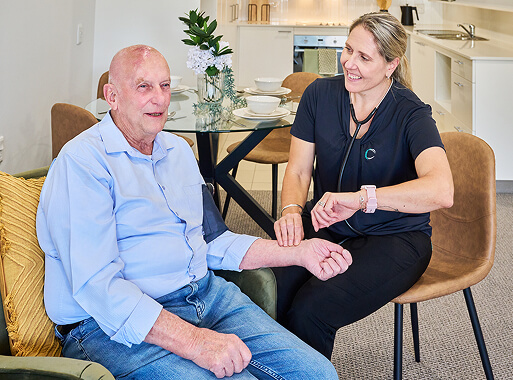


Carrington’s mission is to ensure older people feel safe, supported, and comfortable. We know achieving that mission requires constant innovation and improvement to the standard of care we offer. Our Allied Health Team are undertaking an innovative research program to improve the early detection and management of chronic Oedema in older people. We have been working closely with industry professionals on two projects that help us detect Oedema in patients, the first of which evaluates the reliability of pitting tests when performed by non-clinicians after they have completed an e-learning module. The goal of this is to create a platform by which we can utilise nonclinicians to identify early Oedema and refer them for follow up care. The second project is screening work of the nearly 400 Residents across our facilities. This screening work revealed a high prevalence of Oedema, and the need for earlier intervention. Our Clinicians have been upskilled and mentoring pathways have been made available to strengthen this practice so they can detect oedema earlier.
This practice now supports a therapy approach that connects Residents with intervention much sooner. These interventions can include compression therapy, exercise, and wellbeing programs. Using a SOZO bioimpedance machine, we can use data to monitor and provide personalised care that supports the mobility and independence of our older people. This new research aims to establish a care model for early identification, prevention and management of chronic Oedema in the community and Residential Care. This proactive approach not only supports better quality of life for Residents but also reduces the
need for complex wound care and associated health costs of Oedema. This has the potential to transform current practice, set a new benchmark in care, and drive improvements in Aged Care by embedding preventative, evidence-based management of Oedema into everyday practice.
By addressing Oedema swelling early, we can help prevent skin breakdown, reduce the likelihood of venous leg ulcers and other chronic wounds, and minimise infection risks